
Enlightenment of Brands
Enlightenment of Brands
Custom Design
Have you ever Googled your business name and had your stomach turn at what came up? Perhaps it was a one-star review from an angry customer, an old article, or worse—negative content appearing higher than your own website. Don’t worry, you’re not alone.
Your digital reputation isn’t solely about controlling what folks say about you. It’s controlling how customers think of your brand before they ever engage with you. With 93% of customers reading reviews online before deciding to buy, and 87% refusing to consider a company with a less than 3-star rating, your digital reputation has a direct impact on your bottom line.
This page summaries all you need to know about guarding and building your online presence for your brand. We’ll take you through effective monitoring methods, review management systems, crisis response strategies, and long-term approaches that make your online reputation management a real competitive benefit.

Online Reputation Management is the art of listening, shaping, and enhancing the way your brand looks to audiences online. Consider it your brand’s security system and PR team combined.
At its most basic level, reputation management involves understanding what is being said about your business online and responding in the right way. But it’s far more complex than that. It’s about building good content that accurately reflects your brand, resolving customer issues before they become major concerns, and establishing an online presence that accurately positions you.
The commercial effect is tangible. A good reputation online fosters trust with prospective clients, enhances your visibility on search engines, and provides insulation against bad experiences. When customers notice consistent positive hints about your company—whether it’s reviews, social media interaction, or informative content—they’re more likely to select you over others.

Your digital reputation works 24/7, influencing customer decisions while you sleep. Here’s why it deserves your attention:
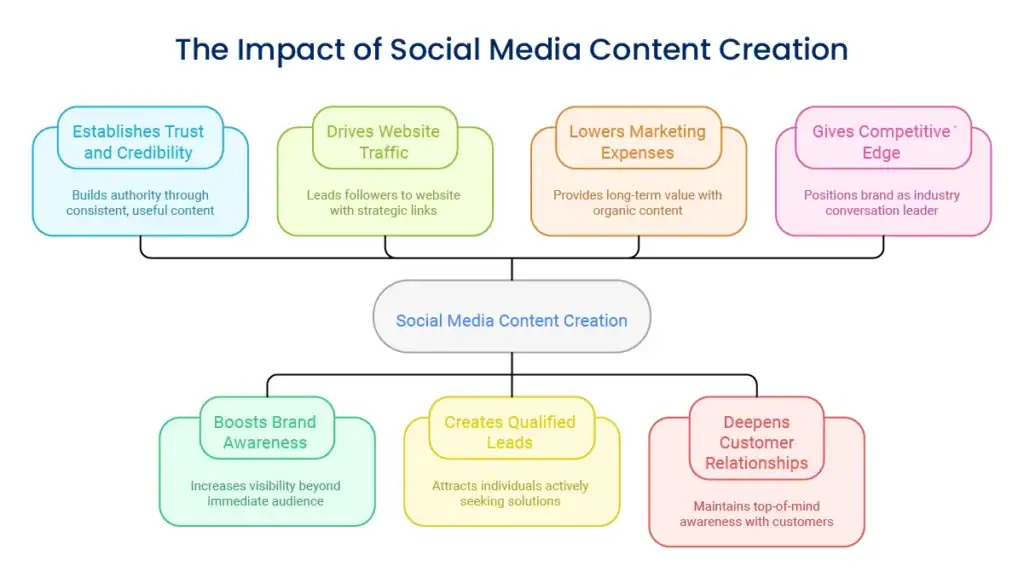
Every positive review, helpful blog post, and professional social media response adds another brick to your credibility foundation. When prospects research your business, they're looking for reassurance that you'll deliver on your promises.
Reports indicate that even a one-star boost in your rating average can drive up revenues by 5-9%. Conversely, a failure to address complaints can lead to as much as 30% of possible buyers viewing those grievances and going elsewhere.
Google favors businesses with good reputations. Favorable reviews, good quality content, and active social media presence all inform search engines that your company is reputable and relevant. Top ranks equate to higher visibility, which equates to more opportunities.
A good reputation is insurance in trying times. Those with well-established positive reputations bounce back from crisis more quickly because they've already established goodwill with their viewers. Constant monitoring translates to catching issues early, usually before they get out of hand.
Your online reputation doesn't only affect customers—it also impacts potential employees. High-quality talent checks up on firms prior to applying. Having a solid digital presence brings in better candidates who share your values.
Online reviews and feedback give you market research for free. Customers let you know precisely what is working and what is broken. Brands that listen and react prove they care, which fosters loyalty.
Begin by getting clear about what success will look like for your company. Are you attempting to recover from negative past reviews? Wanting to create thought leadership in your space? Seeking to drive more search visibility?
Establish specific, measurable objectives. Rather than “improve reputation online,” focus on “attain a 4.5-star average across all platforms in six months” or “show up in the top three results for ‘[your industry] in [your city].'” These precise objectives provide you with something to monitor and enhance.
Monitor the metrics that are important: review ratings averages, volume of reviews, sentiment of mentions analysis, search positions in engines, social media rates of engagement, and website visits from reputation-based searches. Select 3-5 key metrics that are aligned with your business goals.
Plot out where your brand is present online. This means all the above but also business directories, news articles, blog posts, forums, and even employee review sites like Glassdoor.
Make a master list—it’s longer than you think. Each touchpoint is an opportunity to influence perception or a potential weak spot if left unattended.
Leverage special attention to platforms where your target audience spends time. A B2B software firm must pay attention to LinkedIn and industry forums, whereas a restaurant has to give priority to Google Reviews as well as food delivery platforms.
Consistency is important when you’re building a strong brand identity. Prior to replying to reviews or posting online, record your communication style for your brand. Are you professional and formal, or friendly and casual? Do you use humor, or do you keep things simple?
Develop response templates for typical situations: positive feedback, constructive criticism, complaints, crisis, and neutral feedback. Use these templates as a starting point and not a formal script. Consistency in tone and style, not stiff responses, is the aim.
Establish clear escalation protocols. Who responds to standard responses? When should the management be involved? What issues need legal approval? These guidelines avoid confusion in high-pressure moments.
You can’t control what you don’t monitor. Implement automatic monitoring devices that monitor your brand name, major executives, products, as well as frequent misspellings on the web.
Utilize both free and paid options depending on budget. Google Alerts offers basic monitoring at no charge. For more in-depth analytics, utilize tools such as Mention, Brand24, or Hootsuite that include sentiment analysis and comprehensive reporting.
Review sites directly check at least once a week. Google My Business, Facebook, review sites specific to your industry, and even app stores (if applicable) should be checked as part of your routine. Have email notifications set up so you are immediately aware of new reviews.
Track social media mentions beyond tagged posts. Individuals tend to mention brands without mentioning them in the tag. Check your brand name, product names, and related keywords consistently to include these conversations.
Look beyond specific reviews to see if you can identify larger patterns. Are customers repeatedly reporting the same issue? Did sentiment change following a recent alteration? Are there products or services that are causing more gripes?
Monitor sentiment over time with an easy scoring system. Mark mentions as positive, neutral, or negative, then monthly calculate percentages. This provides a clear view of whether things are trending up or down.
Listen to the words customers speak. Certain words that keep popping up let you know what’s resonating with your audience—and what isn’t. This knowledge guides your marketing messages and operational enhancements.
Benchmark against competitors whenever you can. If your average score is 4.2 stars while competitors average 4.7, you’ve found a gap that must be filled no matter how “good” 4.2 may look alone.
Record your results in standard reports—monthly for most companies, weekly in crisis times, or quarterly if you operate in a less changing business. These reports build accountability and allow you to see long-term trends.
Add key metrics, noteworthy mentions (both good and bad), competitive observations, and action items. Make them presentable with charts and graphs that clearly convey status.
Divulge these reports to stakeholders who are interested in them: management, marketing departments, customer service, and anybody else who controls your online image. When everybody knows where things stand, they can coordinate accordingly.

Never, ever ignore good reviews. These customers went out of their way to praise you—acknowledge that effort. A basic “Thank you for your kind words” is better than nothing, but personal responses are even better.
Quote specific points from their review. If they said they loved your chocolate cake, thank them for appreciating your baker’s secret recipe. This indicates you actually read their feedback and not copying and pasting generic thanks.
Use the positive reviews as a chance to affirm your brand values and speak about associated products. “We’re delighted you enjoyed the chocolate cake! Our pastry chef also makes wonderful lemon tarts should you wish something zesty for future visits.”
Keep the responses brief. Two to three sentences are usually adequate for positive reviews. Reserve the long responses for the times when they are absolutely necessary.
Breathe before you respond to criticism. Angry or defensive responses compound bad situations and ruin your reputation some more. Keep in mind: your reply isn’t for the reviewer alone—it’s for all the rest of us reading it.
Begin with empathy and acknowledgment. “We’re sorry to hear about your experience” is effective even if you believe the customer to be unreasonable. Validation does not indicate admitting fault—it indicates that you’re recognizing their emotions.
Respond to specific issues noted in the review. If they griped about slow service, tell them what went wrong and what you’ve done to ensure it doesn’t happen again. Being open is being transparent, and it builds trust.
Move hot arguments offline fast. Offer a simple email or phone number and invite them to call or email you directly. This demonstrates that you’re listening to them while avoiding public bickering that makes everyone look foolish.
Address real issues. If everyone’s saying the same thing in several reviews, it’s not a customer issue—it’s a business issue. Utilize feedback to enhance operations, and then notify your reviewers once you’ve made adjustments.
Provide simple ways for satisfied customers to review. Send reminders with clear links to review sites. Include review requests on receipts, invoices, or post-purchase messages.
Time your requests tactically. Request reviews when customers are likely to be most satisfied—following a successful project delivery, good interaction, or after using your product long enough to have an opinion.
Never provide incentives for good reviews. This is against most site policies and can have your business sanctioned. You can provide incentives for truthful reviews (no matter rating), but even that gets complicated. The best strategy is to just ask.
Teach your staff to ask for reviews as part of normal conversations. “If you’re satisfied with how it all worked out, we’d really appreciate it if you’d give us some feedback online” is effective when said sincerely by a person who really did assist the customer.
Social media is fast moving, and negative feedback can catch on fast. Establish social media monitoring to pick up brand mentions across all social channels where your customers are present.
Respond quickly to messages and comments. Respond within a few hours between business hours. Rapid response indicates you are listening and care about issues raised by customers.
Mirror the tone and style of the platform. LinkedIn needs more formal responses than Twitter or Instagram. Tailor your communication style accordingly while keeping your overall brand voice intact.
Don’t remove negative comments unless they cross platform guidelines (spam, harassment, hate speech, etc.). Removing valid criticism tends to rebound when others screenshot and post proof of censorship.
Reputation management is not only about defending against negative comments—it’s also about proactively creating positive ones. Post useful content regularly that makes your brand appear useful and informative. Tips, tips, behind-the-scenes posting, and customer testimonials all create positive reinforcement.
Connect sincerely with your community. Like and comment on customer posts discussing you (if you have permission). Participate in conversations that matter to your industry. Be human and be interested, not just selling your products.
Emphasize customer reviews and user-generated content (with permission). Double duty: it generates positive content and gets customers to feel appreciated, and hence build loyalty.
Offer opportunities for positive touchpoints. Organize Q&A sessions, conduct helpful webinars, or offer industry tips. All positive touchpoints add up to your overall reputation.
When crisis hits social media, speed and transparency matter most. Acknowledge the situation quickly, even if you don’t have all the answers yet. “We’re aware of the issue and investigating” buys you time while showing you’re paying attention.
Stick to facts and avoid speculation. Only share information you’ve verified. One accurate update is better than multiple corrections to hasty statements.
Demonstrate sympathy towards impacted customers. Apologize when necessary, describe what went wrong (without apologizing for it), and detail what you’re doing to repair it. Humans tend to forgive more when they can see effort being made.
Post frequently during long-standing crises. Even if there’s nothing new to say, keeping people informed you’re still working on it stops the space getting filled with rumor.
One of the best reputation management strategies is to build so much positive, Quality content that the negative results get pushed down in search ranks. Value content that answers questions from customers and shows you’re an expert naturally ranks high.
Begin a blog to address frequent customer questions and industry questions. Every well-optimised article is a chance to take up more real estate in search results with content you own.
Create case studies of successful customer results. These are both reputation builders and sales tools, proving results instead of making promises.
Make YouTube and website video content. Videos tend to rank high in search and are a more effective means of conveying personality than text.
Guest blog on respected industry sites. These pieces build credibility while generating backlinks that help enhance your own site’s search rankings.
Your site, blog, and email list are resources that you have full control over. Leverage them carefully to establish your brand story prior to customers’ exposure to third-party material.
Optimize your “About Us,” “Team,” and “Testimonials” pages so your company name searches rank. When someone searches for your company, these pages should dominate the search results.
Keep active, current social media profiles on your relevant platforms. Even though you may not be posting every day, claimed profiles stop others from setting up fake accounts and allow you to manage what is shown in search results.
Publish regular press releases for significant successes, new products, community involvement, or company milestones. These generate good news stories that online publications may pick up.
Place important team members in the position of industry experts by having them speak, appear as podcast guests, and be published. When your business is linked with known experts, credibility for the business increases overall.
Publish exclusive insights and facts from your operations. Proprietary data and original research garner media coverage and links, increasing reputation as well as search visibility.
Participate in industry forums and communities where your knowledge contributes value. Useful, non-self-promotional input earns respect and identifies your brand with expertise.
Hope for the best, prepare for the worst. While crisis is looming, develop a response plan that details who does what, how decisions are made, and what your initial holding statements will be.
Determine likely crisis situations applicable to your sector. A restaurant has different reputation threats than a software firm. Consider probable issues and pre-draft response templates.
Put together a crisis response team with communications, legal, operations, and executive leadership. Everyone needs to have a clear role before pressure strikes.
Set your communication channels and approval processes. Who approves statements? How are you communicating with employees, customers, media, and other stakeholders? Speed is important in crises, but so is accuracy.
When crisis strikes, own it right away. The worst thing to do is remain silent, letting others frame the narrative. A brief “We know and are looking into it” stalls for time while demonstrating concern.
Recoup facts in a timely manner but carefully. Avoid racing to conclusions you will be forced to backtrack on later. But don’t wait so long that the story gets away from you.
Speak clearly about what went wrong, why it went wrong, and how you’re making it right. Own up where you can—true accountability tends to create more goodwill than bluster.
Report regularly to stakeholders during the crisis. If there’s nothing new to say, informing people you’re still working on it avoids vacuums that get filled with rumor.
Once the crisis is dealt with, concentrate on restoring trust with consistent good deeds. Sustained behaviour change and positive content release are more important than the words you say.
See through fully on commitments made under the crisis. If changes were promised, put them in place visibly and announce when they’re done.
Produce positive content at higher volumes during recovery phases. Write about stories of improvement, customer successes, and good news to rebuild the narrative slowly.
Closely watch sentiment in recovery. Watch to see if perceptions are getting better or if more action is required. Recovery isn’t complete until measurements are back to pre-crisis levels (better).
Your most satisfied customers are your greatest reputation assets. Find customers who adore your brand and approach them with deliberate intention.
Engage in initiatives that allow advocates to tell their stories. Highlight them in case studies, invite them to exclusive events, or request testimonials. Individuals like to be acknowledged for their loyalty.
Create a reward-based referral programme that compensates customers for word-of-mouth marketing. This builds formal incentives for advocacy while growing your good reputation network.
Connect with brand supporters on social media. Like, share, and comment on their posts about you. This affirmation tends to elicit even greater advocacy.
Align your company with well-respected organisations, charities, or industry associations. These affiliations transfer credibility and open up positive news opportunities.
Engage actively with industry groups and events. Speaking opportunities, committee seats, and awards all bolster reputation and build good search results.
Joint ventures with businesses that complement your own on joint projects. Co-created content, events, or products increase your reputation network while introducing new audiences.
Your employees’ online presence impacts your brand reputation. Employees who talk favorably about working for you establish credibility better than any advertising campaign.
Develop a staff advocacy program that simplifies sharing company content for team members. Give them great, shareable content and advice on proper sharing.
Handle employee issues internally to avoid having to deal with them as public complaints. Sites like Glassdoor allow upset employees to harm your reputation among prospective customers and new hires.
Publicly recognize employee success. Praise begets positive connotations while fostering pride that translates into genuine advocacy.
If a person searches your business name, you must have dominance over the majority of the first page results. Optimize your site, social profiles, and associated properties to overwhelm the searches.
Claim and fill out profiles on all relevant platforms—even if you’re not actively going to use them. A filled-out profile outranks an empty one and stops others from assuming that space.
Develop and optimize key team member pages on your site and LinkedIn. These tend to rank well for searches like “[Person Name] + [Company Name].”
Keep an eye on branded search results on a weekly basis. If there is negative content, you can react quicker. If there is positive content, you can amplify it.
Suppress bad results by publishing and sharing good results that rank better. You cannot remove bad content you do not own, but you can bury it under superior results.
Target long-tail variations of your brand and industry. Posts answering particular questions tend to rank well and take up valuable SERP real estate.
Establish high-quality backlinks to good content about your brand. The more authoritative websites pointing to your good content, the better it ranks.
Employ paid advertising tactically to determine what shows above organic listings. Branded search ads guarantee your message is front and center, even if organic results are not optimal.
Review sites usually perform well for branded searches. Claim and actively manage your listings on the key review sites to ensure they present your brand positively.
Maintain accurate and consistent business information on all sites. Inconsistencies puzzle search engines as much as customers.
Get customers to leave reviews on sites most relevant to your business. A dozen current reviews on the correct site is better than hundreds on useless sites.
Reply to comments on every platform where you’re present. Responsive engagement informs both consumers and search engines that you care and are reliable.
Establish a rapport with journalists and bloggers in your field before you have to call on them. When crisis strikes, relationships established beforehand make decent coverage more probable.
Get back to the media in a timely manner—even if it’s “no comment” or “we’ll get back to you shortly.” Deadlines breed appreciation for a speedy response.
Build a media kit with professional photos, executive profiles, company history, and current press releases. Keep it simple for the media to cover you accurately.
When covered in media in a positive light, leverage that coverage across your channels. Media coverage has credibility that unadulterated marketing content can’t replicate.
Your business credibility extends beyond customers. Investors, partners, and vendors research your reputation prior to investing in relationships.
Keep stakeholders informed with open, frequent communication. Quarterly reviews, annual reports, and proactive publication of material changes ensure trust.
Respond openly and quickly to concerns. If business partners are inquiring about your reputation, give candid, direct answers instead of evading the issue.
Get engaged with your local community through sponsorships, volunteering, or collaboration with local organisations. These activities build positive connotations and press coverage.
Support causes that are in line with your brand values. Authentic engagement resonates more than purely transactional giving.
Engage in local events and networking activities. In-person interactions create relationships that often translate into online activism.
Online Reputation Management can’t merely be a marketing effort—it must be incorporated into your company culture. All departments influence reputation, from customer support to product design to accounting.
Make reputation influence a part of decision-making cycles. Before bringing products to market, altering policies, or announcing big news, think about how they’ll influence public image.
Educate all customer-facing staff about reputation management fundamentals. Everyone should know how their engagement informs overall brand perception and how to handle issues.
Develop standard operating procedures for all reputation-touching functions: review responses, social media interaction, crisis communication, and content development.
Assign specific ownership for online reputation management responsibilities. When everybody’s accountable, nobody’s accountable. Assign specific individuals or teams for monitoring, responding, and reporting.
Invest in scalable tools. Manual monitoring is great when you’re small, but growth means automation. Plan your tech roadmap accordingly.
Monitor how reputation gains impact business results. Link improved ratings to more conversions, greater customer lifetime value, or better employee retention.
Estimate the price of reputation management compared to the value it generates. Factor in avoided losses (customers who didn’t depart owing to effective service recovery) and gained chances (sales won owing to excellent reputation).
Examine and change your strategy quarterly. Reputation management is not set-and-forget. As your company develops and markets change, your strategies must change as well.
Silence gives the impression that you don't care or have something to hide. Unremedied complaints tend to worsen as dissatisfied customers tell others even more. Deal with all feedback—favorable, unfavorable, and neutral.
Your online reputation needs to live up to reality. Marketing world-class service but delivering mediocrity gets you disappointed customers who become vocal critics. Transparent communication about capabilities avoids reputation-ruining gaps.
Being argumentative with customers on the internet makes you appear to be unprofessional, whether right or not. Even if a reviewer is utterly unreasonable, your reactive reply harms your reputation more than their criticism.
Purchasing reviews or incentivising positive reviews breaches policy on platforms and can have your business blacklisted. Customers and algorithms are becoming smarter at detecting fake reviews, and being caught ruins credibility.
Old details, ghosted social accounts, or inconsistent messaging between channels confuses and presents you as unprofessional. Be consistent in how your brand is presented everywhere.
When customers complain online, they expect swift response times. Days-delayed replies indicate that customer issues are not a priority, which compounds negative feelings.
Reputation recovery is determined by the extent of damage and effort you put in. Small issues could pick up in 3-6 months of regular effort. Gennine reputation crises need 12-24 months of continuous effort to recover to the best.
It’s all about consistency. You can’t repair reputation issues with a single shot. Ongoing monitoring, ongoing creation of positive content, and real operational changes snowball over time to change perception.
Have realistic expectations. If bad content is highly visible in search results, it will take time to generate sufficient good content to bury it. If customers have left you in disgust because of bad service, they need to see by your actions, not words, that you’ve changed.
You can’t eliminate negative reviews because you don’t like them. Review sites only delete content that goes against their policy: spam, fake reviews, profanity, discriminatory content, or reviews from individuals who never really engaged with your company.
You can report reviews for platform review if you feel they are policy-violating. Success rates are different, and it takes time. Most genuine negative reviews, even critical ones, will remain posted.
Your best bet is responding professionally to bad reviews and inviting more good reviews from happy customers. As your volume of reviews increases and good feedback adds up, individual negative reviews matter less to your overall rating and reputation.
It hinges on your budget, the sophistication of your reputation issues, and the amount of time you can allocate for reputation activity.
Small businesses with uncomplicated needs usually do reputation well within their organization with simple tools and standard practices. If you’re receiving a few reviews per month and having minimal social media presence, you most likely can manage it yourself.
Consult professional assistance if you’re under siege from a reputation crisis, overwhelmed with high volumes of reviews, handling multiple locations, or in a reputation-sensitive sector. Agencies provide expertise, technology, and specialist resources that expedite routine management and crisis mode.
The expense of professional reputation management (usually ₹30,000-₹1,50,000+ per month for regular services) must be balanced against the possible losses of a bad reputation. If negative reviews are losing you clients, professional assistance usually cost-justifies itself.
At least review your key reputation touchpoints weekly. These include Google Reviews, key social media accounts, and any industry or relevant review sites important to your business.
It’s best to monitor on a daily basis if you can afford it. Rapid responses to reviews and mentions show vigilance, and early detection of issues avoids issues from escalating into crises.
Utilize automated monitoring tools to notify you the moment your brand is mentioned online. This allows you to respond fast to time-sensitive issues without dedicating hours a day to manual searches.
Boost monitoring volume during new product releases, big announcements, or any time when you anticipate extra attention. Crisis points need constant checking until they are resolved.
Your reputation online influences customer choices long before they ever reach out to you. Each review, mention on social media, and search result contributes to the impression that brings customers in or drives them to others.
Successful Online Reputation Management isn’t controlling what others say—it can’t be done. It’s about tracking regularly, answering professionally, generating great content ahead of time, and having a brand that builds honest advocacy.
The companies that succeed are those that make reputation management a core part of their culture, not something they reserve for a few marketing campaigns. When everyone knows how their work influences public opinion, and mechanisms are in place to track and respond in an organized way, reputation truly is a competitive edge.
Begin where you are. Implement simple monitoring, claim your profiles, respond to current reviews, and get started with creating positive content. Reputation management is not all-or-nothing—each enhancement adds to your brand’s position.
The issue is not whether you can afford to spend money on Online Reputation Management. With its impact on customer choice so significant, the true question is whether you can afford not to.
Maintaining your online reputation demands effort, know-how, and the right tools over the long term. If you need advice on building a robust reputation strategy that is aligned with your business objectives, our specialists can assist you in establishing credibility and trust for your brand.
We can assist you in building monitoring systems, designing response plans, developing ranking content that is positive, and establishing long-term reputation resilience through strategic brand management. Contact us to see how we might assist your reputation objectives.