Do you want to convert more potential buyers into die-hard fans? Proficiency with your funnel strategy is the secret. A well-crafted funnel is a roadmap that directs individuals from their initial encounter with your brand to their ultimate purchase and on to subsequent purchases as well. This method is the foundation for any effective marketing campaign. This tutorial will take you step by step through everything you need to do to create, operate, and optimize a funnel that produces tangible business returns.
Understanding Funnel Strategy: The Foundation for Business Growth
A funnel plan is your strategy for bringing in and converting prospects. Imagine it as the roadmap to your marketing funnel, defining how you’ll guide individuals smoothly toward a sale. Absent this framework, your lead generation and sales efforts feel scattered and ineffective.
It is crucial to understand this concept in order to achieve sustainable business development. By understanding this, you can connect with your audience on a deeper level, making sure that your sales funnel is full of qualified leads. Let’s discuss what a funnel strategy is and why it is so important for today’s businesses.
What Is a Funnel Strategy?
A funnel strategy is a visual map of the customer journey, tracing the path from discovery to conversion. It’s a central element of your marketing plan that you use to determine how to attract, engage, and convert leads to customers by delivering the right message at every stage. This structure streamlines the whole process, guaranteeing all interactions are meaningful.
The funnel usually breaks down into a few phases of the marketing funnel that are usually condensed into three broad sections: Top of Funnel (Awareness), Middle of Funnel (Consideration), and Bottom of Funnel (Conversion). Each phase needs various marketing strategies based on the mindset of the customer. For instance, you would not display a full pricing page to one who has no idea about your brand.
By developing in-depth buyer personas and knowing what they need, you can match your marketing funnel to the way your audience truly purchases. It results in better-qualified leads and greater conversion rates because you’re reaching individuals where they are at in their buying process.
The Role of Funnels in Modern Businesses
In the competitive environment of the present day, a funnel is no longer a marketing idea; it’s a business imperative. Its initial responsibility is to coordinate your sales and marketing efforts into one cohesive plan that transforms strangers into advocates. This coordination makes sure that leads are able to transition easily from curiosity to a buying decision, greatly enhancing the customer experience.
In addition, a properly designed sales funnel is key to successful lead generation in internet marketing. It enables you to qualify leads according to their interest and involvement, which means your team will only concentrate on prospects that have the highest chances of converting. This is not only time- and resource-saving but also greatly improves your overall conversion rate.
At the end of it all, funnels give you a definite way to measure success. By monitoring how users are flowing through every step, you can find bottlenecks, experiment with enhancements, and refine your marketing strategy for ongoing growth. Do you have any idea where your prospects are falling off? A funnel can inform you.
Marketing Funnel vs. Sales Funnel: Key Differences
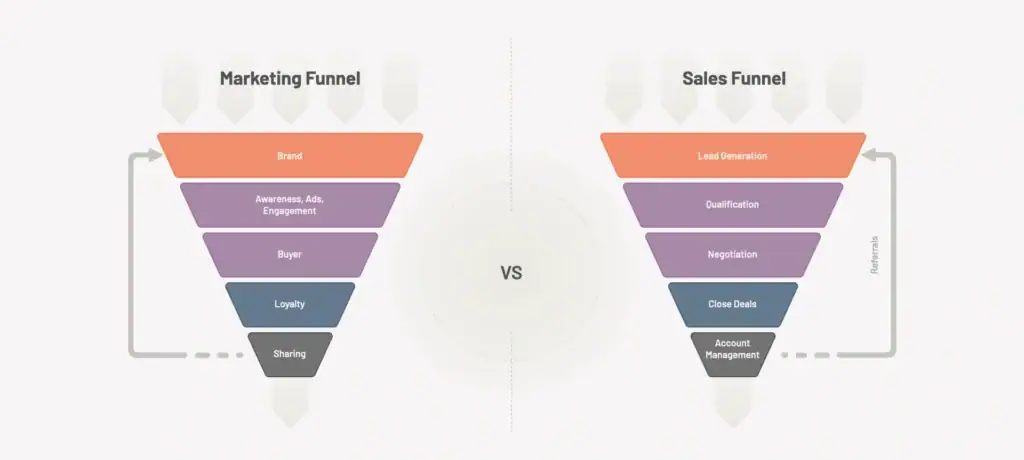
Although the words are utilized interchangeably, a marketing funnel and a sales funnel have various functions. The marketing funnel is wider, concentrating on lead generation and awareness among potential clients. Its primary purpose is to attract a large audience and guide them towards becoming interested in your brand.
On the other hand, the sales funnel is narrower in scope. It captures the leads that are qualified from the marketing funnel and funnels them through to make a purchase. Knowing these differences is important to develop an integrated funnel marketing strategy where the two funnels complement each other to meet your business objectives, particularly at the point of conversion.
Definitions and Core Functions
A marketing funnel is created to build leads. It covers all action that brings in prospects at the beginning and cultivates them through the process of marketing funnel stages. Its scope is wide, ranging from the initial awareness phase to converting a visitor into a marketing qualified lead (MQL), possibly by asking them to sign up for a newsletter or a trial.
Conversely, the sales funnel is laser-aimed at converting those MQLs into paying clients. It steps in as soon as a lead demonstrates definite buying intent. The main aim here is to close the sale, advancing the prospect from the consideration stage to the final conversion point at the end of the funnel.
Following is a basic outline of how they differ from each other:
| Feature | Marketing Funnel | Sales Funnel |
| Primary Goal | Generate and nurture leads | Convert leads into customers |
| Scope | Broad: Attracts a wide audience | Narrow: Focuses on qualified leads |
| Key Activities | Content marketing, SEO, social media | Demos, proposals, contract negotiation |
| End Result | Marketing Qualified Lead (MQL) | Closed Sale / New Customer |
Where Marketing and Sales Funnels Interact
The sales funnel and marketing funnel are not distinct concepts; they are two sides of a single coin, meant to complement each other. The point of their interaction is the passing on of a qualified lead. This occurs when a prospect goes through stages of the marketing funnel and is qualified to proceed with direct sales interaction, becoming a “sales qualified lead” (SQL).
This all-important conversion point often occurs between the mid and bottom of the funnel. Prospective customers are nurtured by marketing through content and interactions until they send strong buying signals, like asking for a demo or quote. At this point, the lead is transferred to the sales team, which then takes over to complete the final conversion process.
For this exchange to be fluent, both groups have to be on the same page when it comes to a qualified lead. Open communication helps the marketing team hand over quality leads and allows the sales team to close them efficiently. It is this alignment that makes a full-funnel approach so effective, providing a smooth experience for the customer from beginning to end.
Mapping the Customer Journey within Your Funnel
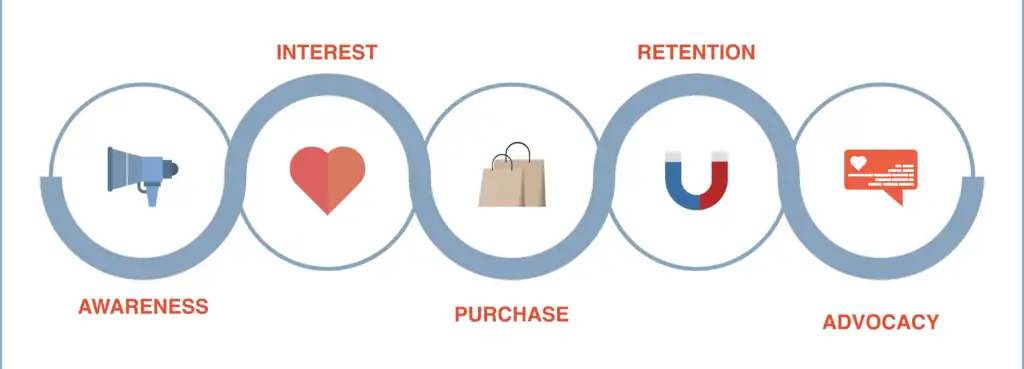
To create a good funnel, you need to know the route your prospective buyers are going through first. Mapping the customer journey is about seeing the process from their end, not yours. It is about discovering their questions, motivations, and pain points at each stage, from early awareness to the ultimate decision to buy.
This is the foundation of an effective marketing funnel strategy. It enables you to customize your content and engagement to what the customer requires at each of the marketing funnel stages, making your experience more relevant and engaging, and leading them naturally through.
Why Customer Journey Matters
Understanding the customer journey is important because today’s buyers don’t progress in a linear fashion. They may enter your funnel in the middle, go back and conduct additional research, or engage with your brand on multiple touchpoints before making a purchase. A strict, linear understanding of the funnel just doesn’t acknowledge this fact.
By mapping the real journey, you learn so much about your customers’ behavior and pain points. You can see where they get hung up or frustrated, where the opportunities are to enhance the customer experience. Are they lost on your pricing page? Are they searching elsewhere for reviews? Journey mapping does this.
In the end, prioritizing the customer journey improves all your marketing efforts. Rather than guessing, you can use actual data to refine your digital marketing funnel so you’re delivering value at each touchpoint and creating a path to conversion that is helpful, not pushy.
Finding Key Touchpoints in the Funnel
Key touchpoints are any time a potential customer is interacting with your brand somewhere along the funnel. The identification of these moments is important in order to deliver the correct message at the correct moment and to achieve maximum customer engagement. These interactions may occur online or offline, on multiple platforms and devices.
To chart these touchpoints, begin by walking through the purchasing process in a customer’s shoes. What touch points would they use to find solutions to their issues? What information would they look for when weighing alternatives? This exercise identifies where your brand must be and what content you must provide.
Some key touchpoints to include in your funnel are:
- Blog Entries and SEO: Frequently the initial entry point, where users discover answers to their questions.
- Social Media: A venue for brand discovery, interaction, and sharing user-generated content.
- Email Campaigns: Best for lead nurturing with tailored content, promotions, and updates.
- Landing Page: A key touchpoint created for a single purpose, such as trialing or downloading a guide.
Essential Stages of the Funnel Explained
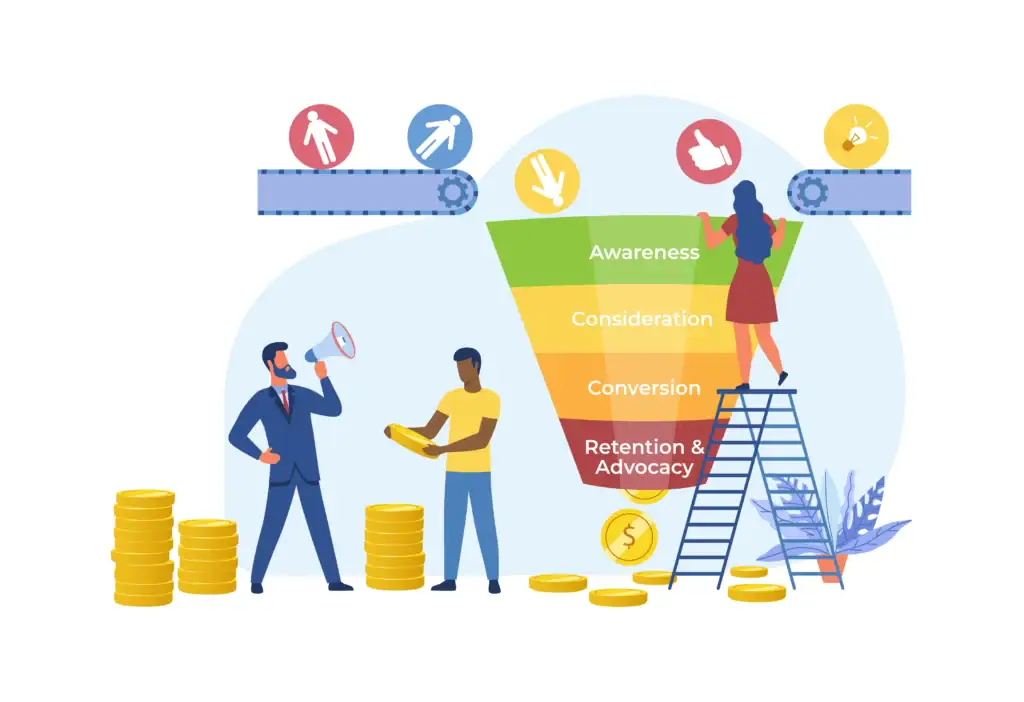
Every successful funnel pushes users through a number of distinct stages. The most prevalent model breaks these down into three essential phases of the marketing funnel: Awareness at the top, Consideration in the middle, and Conversion at the bottom. Each phase is a different state of mind and necessitates a different strategy to advance prospects further.
In addition to the first-time buy, an exceptional funnel also involves retention. The last phase is all about transforming one-time shoppers into lifelong customers and even brand champions. Let’s dissect what occurs at every one of these vital stages.
Awareness—Introducing Your Brand
The awareness stage is situated right at the top of the funnel (TOFU), wherein your potential customers first become aware of your brand. Here, they are probably aware of a problem or need but are yet to be aware that your solution exists. The main aim here is to get a large audience and create brand awareness rather than making a hard sell.
Your marketing strategy must be centered around informative and entertaining content based on solving your target audience’s pain points. That involves developing high-quality blog entries that are search engine optimization (SEO), sharing useful knowledge on social media, and implementing targeted ads. The solution is to be helpful and to position your brand as a go-to source within your business niche.
Imagine this phase as shooting a broad net. You are presenting your brand to new visitors and demonstrating what you are offering without obligation. By giving value first, you pique their interest and get them interested in learning more, drawing them further into the funnel.
Consideration—Engaging and Educating Leads
When a lead shifts to the consideration phase, they are half-way down the funnel (MOFU). They know your brand now and are actively looking for solutions to their needs. Your objective is to connect with these leads, educate them some more, and develop a relationship of trust to differentiate your brand from other competitors.
At this stage, the prospects are weighing their choices. You can cultivate them with deeper educational material that speaks to their pain points directly. This encompasses in-depth blog articles, case studies, white papers, and product comparison guides. Email marketing comes into its own here, enabling you to send targeted content according to a lead’s interest and behavior.
The consideration phase is all about showcasing your expertise and displaying how your service or product can help solve their exact issues. Through sharing valuable information and establishing a relationship, you place your brand as the ideal option, making them more inclined to proceed toward a decision.
The conversion phase is at the base of the funnel (BOFU), where your lead is about to make a decision. You have got them hooked and gained their trust; now you need to convince them to act. The aim is to make the buying process as easy and engaging as possible.
Here, you need to give certain reasons why your brand is the best option. Strategies such as free trials or demos enable potential customers to feel the value of your product firsthand. A well-designed landing page with a clear call to action, social proof in the form of customer testimonials, and transparent pricing can make the final doubts disappear.
Converting Success in the conversion phase is all about eliminating friction and validating value. With a compelling offer and benefits clearly articulated, you provide prospects with the ultimate nudge they need to become customers. Did you make it simple for them to say “yes”?
Retention and Advocacy—Building Loyal Customers
The funnel does not culminate with a purchase. The retention and advocacy phase is where you emphasize what comes after the sale, which is vital for sustainable growth. You want to drive repeat buys and convert happy customers into passionate brand champions. That is where you maximize customer lifetime value (CLV).
To create customer retention, you must keep offering value. This can be done in the form of personalized follow-up messages, special content, and good customer service. Having loyalty programs that reward the customers for repeated business is another good way to make them return again and again.
When customers feel appreciated, they are more likely to become brand ambassadors who will refer you to others. Both encouraging reviews, posting their good things on social media, and devising referral programs can turn your loyal customers into a potent marketing machine. This builds a good feedback loop, returning fresh prospects back to the top of your funnel.
Building an Effective Funnel Strategy Step by Step
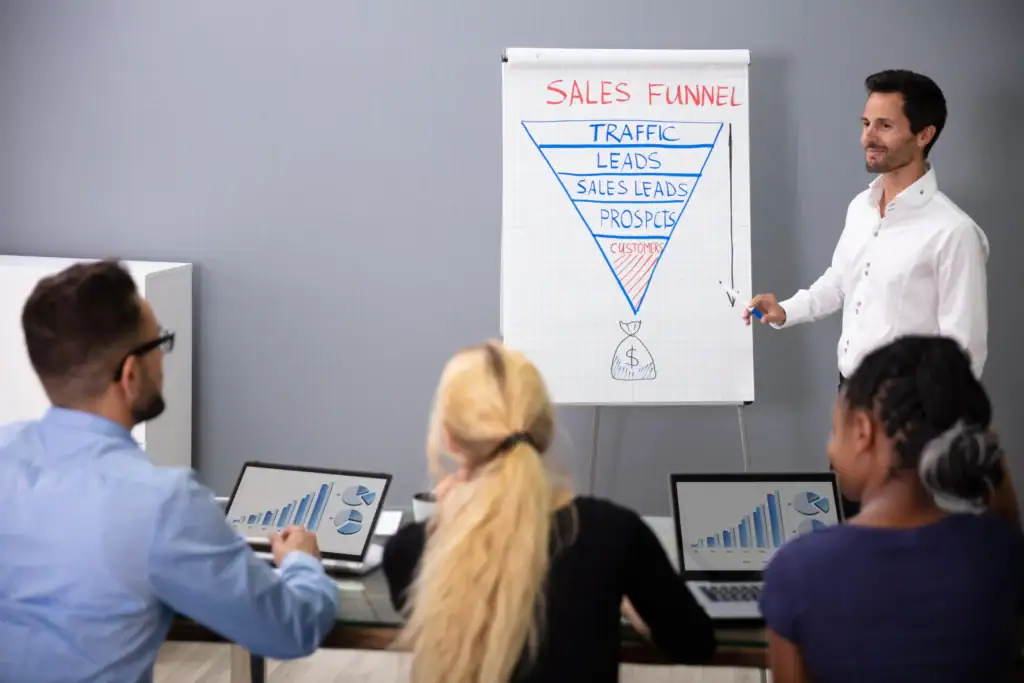
Building a successful funnel strategy need not be overly complex. It’s a systematic process beginning with a strong grasp of your target audience and culminating in a framework for ongoing improvement. A good funnel marketing strategy will see your content marketing efforts aligned with each of the marketing funnel stages.
This step-by-step tutorial will guide you through the necessary steps to create a funnel from scratch. With these steps, you can design a tailored plan that successfully captures, nurtures, and converts leads. Let’s start with the most critical component: your audience.
Defining Your Target Audience
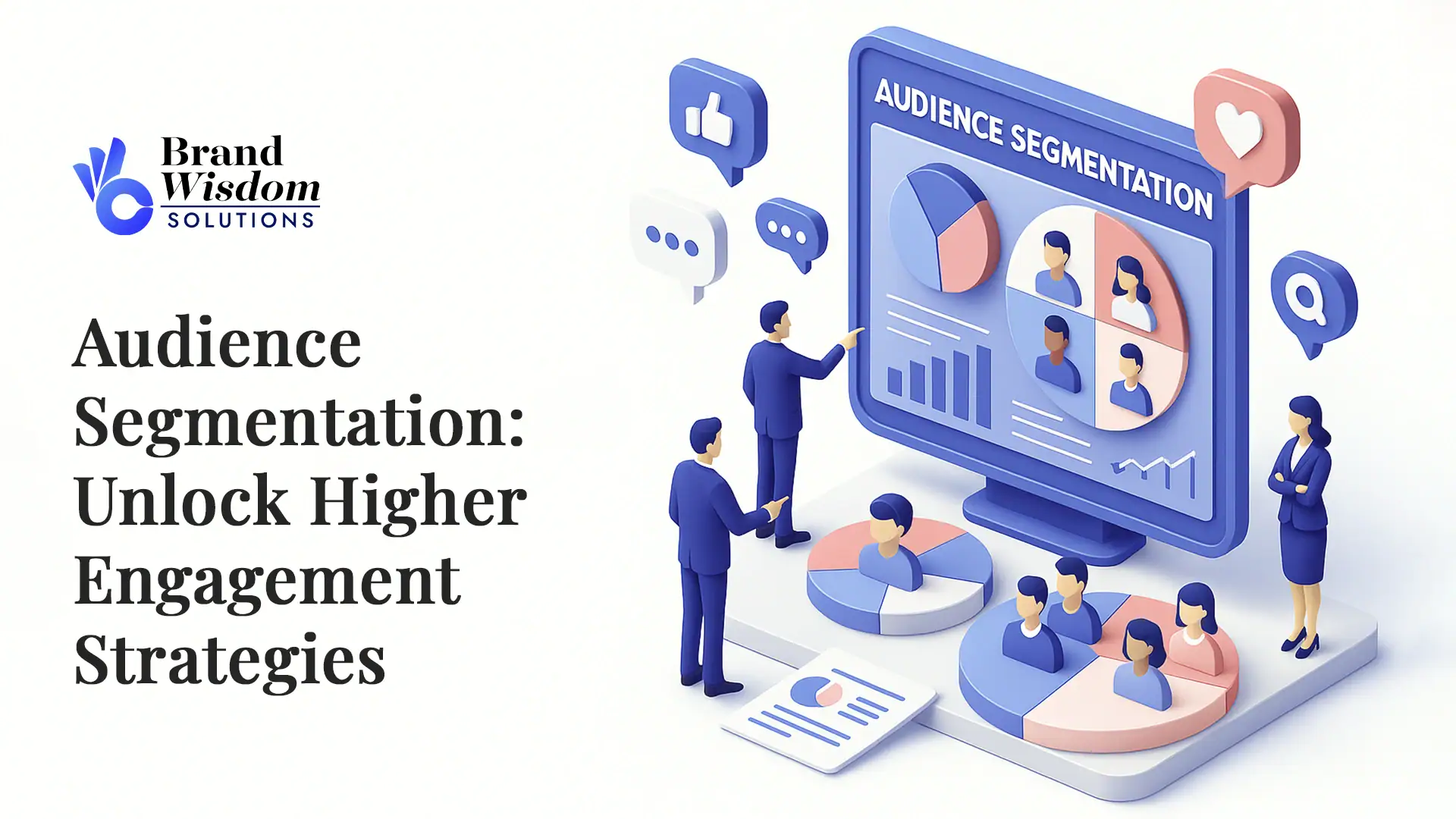
Before you can construct a funnel, you have to know precisely whom you’re constructing it for. Identifying your target market is the initial step which dictates each other decision which you will make. This is about developing detailed buyer personas that are more than simple demographics to find out what drives and hurts your prospective buyers.
What are they struggling with? What do they want? Where do they turn to find it? Asking and answering these questions gives you the messaging and offers that really connect. When you know your audience more intimately, you can drive better-qualified leads who actually care about what you sell.
To develop your buyer personas, pay attention to these areas:
- Demographics: Age, where they live, job title, and income.
- Pain Points: The actual issues they are attempting to resolve.
- Goals: What they wish to accomplish by adopting a product or service such as yours.
- Behavior: The social media platforms where they spend their time and the kind of content they consume.
Creating Content at Every Funnel Stage
Successful content marketing means producing various content types for every step of the funnel. Your aim is to present the correct information at the right moment to take prospects seamlessly through their process. One-size-fits-all doesn’t cut it, since a prospect’s requirements shift as they progress toward a conclusion.
At the top of the funnel, use broad, informational content that grabs attention. Once prospects reach the middle, use more specific content to help them compare their choices. At the bottom, your content must be extremely specific and actionable, intended to close the sale.
Here are some ideas for content at different stages:
| Top of Funnel (Awareness) | Blog posts, infographics, social media updates, and educational videos. |
| Middle of Funnel (Consideration) | In-depth guides, white papers, case studies, and comparison articles. |
| Bottom of Funnel (Conversion) | Customer testimonials, free trials or demos, and detailed pricing pages |
| Post-Purchase (Retention) | Onboarding email campaigns, usage tips, and loyalty offers. |
Leveraging Personalization for Higher Engagement
Personalization is a strong method to get your funnel to work more effectively. Rather than sending all leads the identical message, you are able to utilize information to address them with customized messaging and deals based on their unique needs and interests. This straightforward marketing strategy has the potential to grow customer participation and conversion rates exponentially because it indicates you know and care for each customer.
Sending the proper message to the right person at the right time makes prospects feel heard and understood. For instance, an email campaign could be segmented according to a user’s past website behavior, so the content delivered to them is extremely relevant to what they’ve already demonstrated interest in. This cultivates trust and propels them through the funnel more quickly.
These are some ways that personalization can be used:
- Segmented Email Lists: Segment subscribers by their interest, behavior, or stage in the funnel.
- Dynamic Website Content: Display various headlines or promotions on your website depending on a visitor’s source or geography.
- Personalized Product Recommendations: Recommend products based on a user’s history of browsing or previous purchasing.
Common Mistakes to Avoid in Funnel Strategy

Even the most well-meaning funnel plan will fall apart if it succumbs to familiar pitfalls. Most companies become so intent on creating a perfect marketing funnel that they overlook easy mistakes that can ruin their marketing and drive away potential clients.
Awareness of these traps is the key to avoiding them. From overcomplicating the model to overlooking essential funnel metrics, these are errors that can keep your funnel from being the best it could be. Here are two of the most common mistakes and tips on how you can avoid them.
Overcomplicating the Funnel Structure
One of the biggest errors in funnel design is overcomplicating the funnel structure. It’s easy to include too many stages of the marketing funnel, sophisticated rules of automation, and dozens of touchpoints in trying to build the “perfect” journey. But this tends to have the opposite effect, producing a frustrating and confusing experience for the user.
A complex marketing funnel can add unwanted friction. Each additional step or choice you require a user to make is an additional chance for them to fall off. If a prospect can’t clearly see where they are and what they should do next, they’ll leave and not return. Simplicity is nearly always better.
Rather than creating more steps, optimize the core ones. Make sure the journey from awareness to conversion is as straight and uncluttered as possible. Your aim must be to eliminate obstacles rather than cause them. A clean, streamlined funnel plan addressing major pain points will always beat a complicated one.
Ignoring Data and Analytics
Another fatal error is creating a marketing funnel and not monitoring how well it does. In the absence of data and analytics, your funnel is operating on spec. You don’t have a clue what’s working, what’s leaking, or where to prioritize your optimization efforts. Data is the oxygen of a successful funnel strategy.
By tracking key funnel metrics on a regular basis, you can better understand the journey of your customers. Analytics software can highlight precisely where users are falling off, which content performs best, and which channels produce the highest-quality leads. This type of data is priceless for making savvy decisions and optimizing your conversion rate along the way.
To get around this error, make data a core component of your process. Key metrics to measure are:
- Conversion Rate by Stage: Look at how many users are progressing from one stage to the next.
- Cost Per Acquisition (CPA): Determine how expensive it is to acquire a new customer.
- Customer Lifetime Value (LTV): Track the value of your customers over the long term.
Conclusion
In concluding our exploration of funnel strategy, it’s certain that a mastery of this method is critical to business development. By comprehending the essential elements of your funnel—from awareness to retention—you can produce a smooth process for your customers that invites interaction and loyalty. Keep in mind that successful funnel strategies are predicated upon the accurate delineation of the customer journey, content personalization, and ongoing optimization of each step. Steer clear of frequent mistakes such as overcomplicating your layout or skipping data analysis so that your plan doesn’t become outdated. Ready to move forward to improve your funnel strategy? Contact us for a free consultation and let’s grow your business in return!
Frequently Asked Questions
How do I gauge the success of my funnel strategy?
You can gauge success by monitoring major funnel metrics at each step. Keep an eye on your overall conversion rate, cost per acquisition (CPA), and customer lifetime value (LTV). Reviewing these figures will indicate how effectively your marketing is getting individuals through the sales funnel and reveal areas in need of improvement.
What are some real-world instances of effective full-funnel strategies?
Effective funnel strategy examples are Amazon’s personalized suggestions that lead to repeat buys and HubSpot’s content-based digital marketing funnel. They provide free tools and training to establish brand awareness, and then leverage that trust to turn prospects into paying customers, with a smooth journey from top to bottom.
In what ways does funnel strategy aid in customer acquisition?
A funnel approach simplifies customer acquisition by methodically directing potential purchasers. It begins with establishing brand exposure at the awareness level to reach a broad audience. Next, it employs focused lead generation strategies to cultivate interest and effectively convert the best-qualified prospects into new customers, making the entire process more predictable.