
Custom Design
Did you ever start a great marketing campaign and wonder if it ever did more than scratch the surface for your company? You are not alone. Startup CEOs and small business owners are often overwhelmed by data points, unable to determine which campaigns are generating true return and which are merely burning money.
Performance analysis and optimization is not merely about gathering numbers—it’s about turning raw information into actionable insight that drives sustainable growth. Done correctly, it’s your secret sauce, enabling you to make wiser decisions, better allocate resources, and continually drive higher return on investment.
This page will guide you through all that there is to know about performance analysis and optimization, from learning the basics to applying practical frameworks that drive measurable outcomes for your brand.
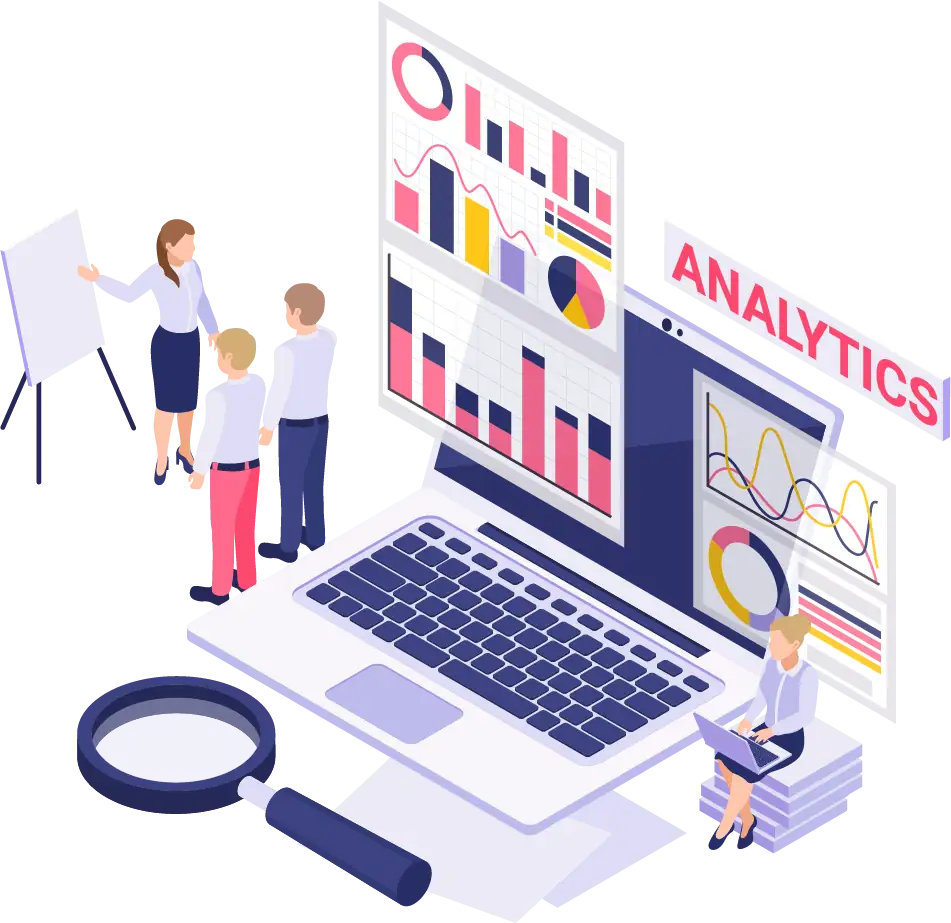
Performance analysis and optimization is the disciplined practice of quantifying, examining, and refining your business functions to deliver improved results. Consider it your business check-up fused with a plan for improvement.
At its core, performance analysis is about gathering and analyzing data from all the touchpoints within your business—whether that’s your website traffic, social media activity, email opens, or sales conversions. The optimization aspect takes those insights and turns them into action, allowing you to tweak your strategy to achieve more with the same or even less resources.
Whereas plain reporting only informs you of what occurred, performance analysis gets to the bottom of why something occurred and how you can improve. It links the efforts of your marketing with business results, providing you with a concise view of what works and what does not.

Ambitious business people understand that assumptions and gut instincts only get you so far. Here’s why optimization and performance analysis need to be at the core of your growth plan:

Rather than making educated guesses about which channels to market in, you'll have hard data to make your decisions by. Less waste of resources, more consistent outcomes.
Once you know what activities are providing the highest ROI, you can continue to double down on winners and cut back on losers. A 10% increase in efficiency alone can make a big difference in your bottom line.
By doing user experience testing and customer journey mapping, you will see friction points that are keeping people from becoming customers. Removing these frictions tends to produce instant gains in conversion rates.
Most small enterprises make decisions based on instinct as opposed to information. By adopting performance analytics, you'll be making better decisions than your competitors, and that is a massive competitive edge in the market.
Performance optimization builds systems and processes that scale. As your business expands, you'll already possess the infrastructure to absorb added volume without escalating costs proportionally.
Identify precisely where to spend your limited marketing budget to maximize the impact. This is particularly important for small and startup companies where each rupee matters.
Understanding the building blocks of performance analysis helps you create a comprehensive measurement strategy that covers all aspects of your business growth.

Your KPIs are the life signs of your business, but picking the right ones can make or break your efforts at analysis. The trick is to track those metrics that directly relate to your business goals instead of vanity metrics that look great but don’t create real value.
Begin with your top business objective—whether that is revenue growth, customer growth, or customer retention. Then go backwards from there to determine the specific actions and behaviors that lead to that objective. For most companies, that means including metrics such as customer acquisition cost, lifetime value, conversion rates, and monthly recurring revenue.
Having appropriate tools and infrastructure in place is essential to gathering good, actionable data. That means putting in place the right tracking on your site, putting in attribution models that tell you which marketing channels are truly responsible for conversions, and keeping your data clean and valid.
Current companies require quantitative information (the numbers) and qualitative knowledge (the reason why the numbers are what they are). That may involve merging Google Analytics information with consumer opinion surveys, or combining heat mapping tools with conversion tracking to find out how users go about behaving.
The power of monitoring your own performance in real time puts you at a tremendous advantage, particularly in high-speed digital landscapes. Real-time monitoring allows you to catch issues before they become costly errors and take advantage of opportunities before they get cold.
This doesn’t mean you need to watch dashboards all day, but having systems that alert you to significant changes—like a sudden drop in website performance or an unexpected spike in ad costs—allows you to respond quickly and minimize negative impacts.
Not all small businesses require sophisticated predictive models, but being able to see trends and patterns in your data will enable you to make forward-thinking decisions instead of constantly responding to what’s already occurred. A simple analysis of trends can identify seasonal trends, customer behavioral shifts, and upcoming opportunities.
Increasingly, machine learning capabilities are available that allow businesses to automate mundane optimization activities such as bid optimization for paid advertising or content recommendations to website visitors.
Your customers don’t touch your brand through a single channel, and therefore, your performance measurement shouldn’t be siloed as well. Seeing how your email marketing, social media, content marketing, and paid advertising relate to each other provides you with a fuller understanding of what drives results.
This whole-process approach prevents you from making the trap of optimizing standalone channels and potentially damaging overall performance even when it’s optimizing individual metrics.
Making performance analysis a reality need not be daunting. Use this down-to-earth guide to create a system that matures with your company and provides steady gains.

Begin with a clear definition of what success for your company is. This is more than a vague aim such as “boost sales” to concrete, quantifiable targets such as “boost online sales by 25% in six months while keeping existing customer acquisition costs.”
Once you know your objectives, determine what specific metrics will help you measure the progress toward those objectives. A good approach is to look at 3-5 key metrics rather than trying to track everything. Remember that you’re after actionable insights, not data overload.
Inventory what data you’re already gathering and find holes in your measurement plan. Look over your website analytics setup, examine your social media metrics, and make sure you’re monitoring the customer journey from initial interaction to ultimate purchase.
Pay close attention to issues related to data quality such as duplicate tracking, lost conversion data, or inconsistent naming conventions that have the potential to bias your analysis. Clean and dependable data is the basis of successful optimization.
Implement tracking for each important customer touch point so that you can trace the entire customer path. These include website behavior tracking, email performance measurement, social media measurement, and tracking conversions through all channels.
Consider using Real User Monitoring to see how actual users experience your site, including Core Web Vitals measures such as Largest Contentful Paint, Interaction to Next Paint, and Cumulative Layout Shift that have a direct impact on both user experience and search rankings.
You have to know where you’re beginning before you can optimize. Gather a minimum of 4-6 weeks of baseline data to recognize your existing levels of performance and recognize natural fluctuations in your metrics.
Record not only the figures but also context—what marketing promotions were in flight, any seasonality influences, or outside events that could have impacted performance. Context is critical when examining change over time.
Set up regular cadences for checking your performance information. This could include monitoring your key numbers on a daily basis, weekly check-ins on performance, and monthly in-depth analysis sessions where you search for trends and potential areas of optimization.
Use data visualization software to make your findings more understandable and actionable. Charts and dashboards enable you to identify patterns and convey insights to team members or stakeholders who are not comfortable with raw data.
Search for trends in your data that indicate areas of opportunity for improvement. This could be traffic-heavy pages with low conversion rates, marketing channels where efficiency is dropping off, or underperforming customer segments relative to others.
Rank opportunities in terms of likely impact and ease of implementation. Low-hanging fruit that are quick to accomplish with low resources can generate momentum while you tackle more substantial, harder optimization initiatives.
Your A/B testing is your best bet for confirming optimization hypotheses before releasing them in full. Begin with high-impact, low-risk tests such as headline differences or call-to-action button alteration prior to implementing more drastic changes.
Make sure your tests are allowed to run long enough to garner useful data and for natural fluctuations in user behavior. A minimum standard is to run tests until there are at least 100 conversions per variation or two weeks.
Performance optimization is not a single project—rather, it’s an end-to-end process of measurement, analysis, and tuning. Create systems that make it simple to regularly measure performance, discover new opportunities, and make improvements. Consider automating optimization for routine functions and keeping human intervention for strategic decisions. Marketing automation software can automate tasks such as bid optimization and audience segmentation, leaving your time for more strategic high-level thinking.
Selecting the appropriate tools can make a huge difference in your capacity to obtain insights and effectively implement optimizations. Below are some groups of tools that most companies find useful:

Google Analytics 4 offers detailed website performance information, while platforms such as Google Search Console assist you in seeing how you perform SEO. For more advanced needs of businesses, platforms such as Adobe Analytics or Mixpanel offer deeper segmentation and analysis features.
Tools like Google Optimize (free) or Optimizely (premium) make it easy to test different versions of your website pages or marketing campaigns. These platforms handle the statistical analysis for you, ensuring your test results are reliable.
Tools such as Hotjar or Crazy Egg illustrate exactly how users are behaving on your site, providing insights that may not be evident through standard analytics. They are especially useful for detecting usability problems and areas for optimization.
Native platform analytics (Facebook Insights, Twitter Analytics, LinkedIn Analytics) give you detailed performance information for your social efforts. Third-party apps such as Hootsuite or Sprout Social allow you to compare performance across multiple platforms within one dashboard.
Even the most well-meaning companies can sabotage their optimization efforts by falling into these pitfalls:

Page views and social media followers will make you feel warm and fuzzy, but they don't necessarily translate to business success. Always keep metrics that directly relate to your revenue and business goals at the forefront.
The urge to make changes right away when you see problematic data is strong, but impulsive responses can be counterproductive. Allow your tests and optimizations to create significant data before making changes.
Tiny test populations and brief test durations can create illusive results. Ensure your tests are long enough and produce enough data so that your conclusions are statistically valid before acting on them.
Seasonal patterns, actions by the competition, and shifts in the market can all have effects on your metrics. Always think about outside context when investigating change in your data.
The frequency of your performance reviews should keep pace with the speed of your business and the characteristics of your metrics. For most small businesses, monitoring key metrics on a daily basis, weekly performance reviews, and monthly thorough reviews strike a good balance between remaining well-informed and preventing data overload.
High-velocity companies or companies that are actively running paid ads campaigns may require more regular checking, whereas companies with more extended sales cycles can tolerate less regular in-depth analysis.
Performance analysis need not have a big budget to initiate. Several robust tools such as Google Analytics, Google Search Console, and simple social media analytics are absolutely free.
For companies investing over ₹50,000 per month in marketing, spending 5-10% of that on optimization platforms and advanced analytics tools usually returns its investment through enhanced efficiency and output.
Optimization time to view the results depends greatly on what you’re optimizing and how important the changes are. Improvements in website usability may yield instantaneous results, whereas SEO optimization can take anywhere from 3-6 months to completely influence your search rankings.
Most companies notice some improvement within 4-8 weeks of having a systematic performance optimization and analysis program in place, with dramatic gains building over 3-6 months as you collect more data and perfect your approach.
Learning performance analysis and optimization provides you with a major competitive edge in the data-driven business landscape today. By measuring what matters systematically, knowing what drives results, and continually optimizing your way, you’ll make better decisions that translate to sustained growth.
The companies that do well in competitive environments are the ones that are able to turn on a dime based on actual knowledge instead of assumptions. Performance analysis gives that agility a foundation, allowing you to see opportunities that others cannot and maximizing your resources to achieve the greatest impact.
Keep in mind you don’t have to do it all in one shot. Begin with the fundamentals—accurate goals, sound data gathering, and regular beat rhythms of analysis. As you gain confidence and track progress, you can add increasingly advanced instruments and procedures to your optimization arsenal.
Implementing end-to-end performance analysis systems can be daunting, particularly when your mind is preoccupied with driving your business on a daily basis. Whether you’re willing to tap the full potential of your marketing activities with strategic performance monitoring and data-based optimization, you can think of collaborating with professionals who have expertise in turning data into growth.
Whether you require assistance creating baseline measures, developing sophisticated analytics and reporting systems, or building optimization strategies that will meet your business objectives, consulting with seasoned experts can expedite your outcome while helping you avoid costly mistakes that could lose time and resources.
Enter your email to get instant access